
Location: Ethiopia/Oromia/West Hararge
Credit: Zenebe Mekonnen
Initiative: GIZ (GIZ)
Project: Sustainable Land Management for Sustainable Livelihoods
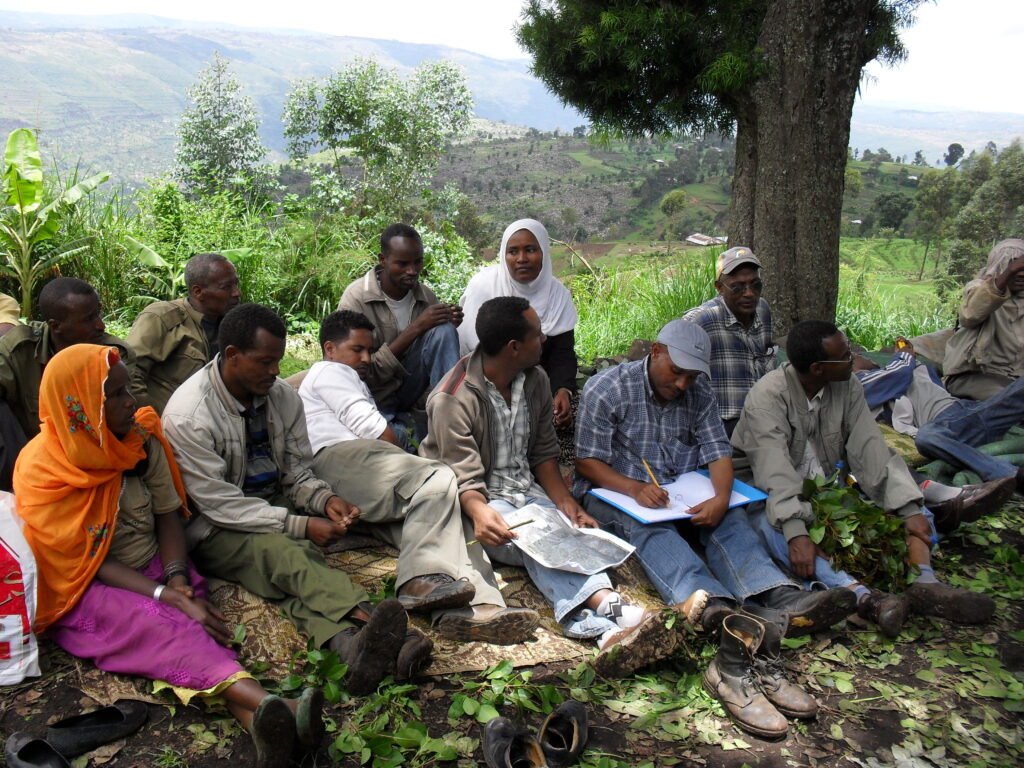
Story: In the soft light of late afternoon, a circle of people gathers in an open field—farmers, local elders, development practitioners, and environmental experts—brought together by a shared concern for the land that sustains them. The soil beneath their feet tells a story of both abundance and strain: patches of green crops stand alongside areas worn thin by erosion and unpredictable rains. This meeting is not accidental; it is the result of a collective effort to confront these challenges through dialogue and cooperation.
At the center of the group, a facilitator gestures toward the landscape, inviting reflection. Men and women alike contribute their voices, sharing lived experiences and practical knowledge. A farmer describes how shifting rainfall patterns have affected planting seasons, while another participant explains traditional soil conservation techniques passed down through generations. The experts listen closely, offering insights on sustainable land management—introducing ideas such as terracing, agroforestry, and water harvesting methods that can restore productivity while preserving ecological balance.
What makes this moment powerful is not just the exchange of information, but the spirit of mutual respect and willingness. Everyone present has consented to be part of this dialogue, understanding that meaningful change requires collective ownership. Women, often underrepresented in such discussions, are visibly engaged—raising concerns about fuelwood scarcity, household food security, and the need for inclusive solutions. Their presence signals a shift toward more equitable participation in decision-making processes.
The field itself becomes a living classroom, where theory meets practice. Participants walk together, pointing to specific areas where interventions could be applied. Ideas are debated, refined, and adapted to local realities. There is a sense of cautious optimism—an understanding that while challenges are complex, they are not insurmountable.
Beyond this single moment, the discussion reflects a broader societal transition. Communities are moving from reactive coping strategies to proactive, knowledge-driven approaches. By bridging scientific expertise with indigenous knowledge, they are building resilience against climate variability and environmental degradation. The potential impact extends beyond improved yields; it touches livelihoods, food security, and the long-term sustainability of the ecosystem.
Captured in this photo is more than a meeting—it is a snapshot of collaboration, empowerment, and hope. It tells the story of people coming together, not just to talk about change, but to begin shaping it with their own hands.