
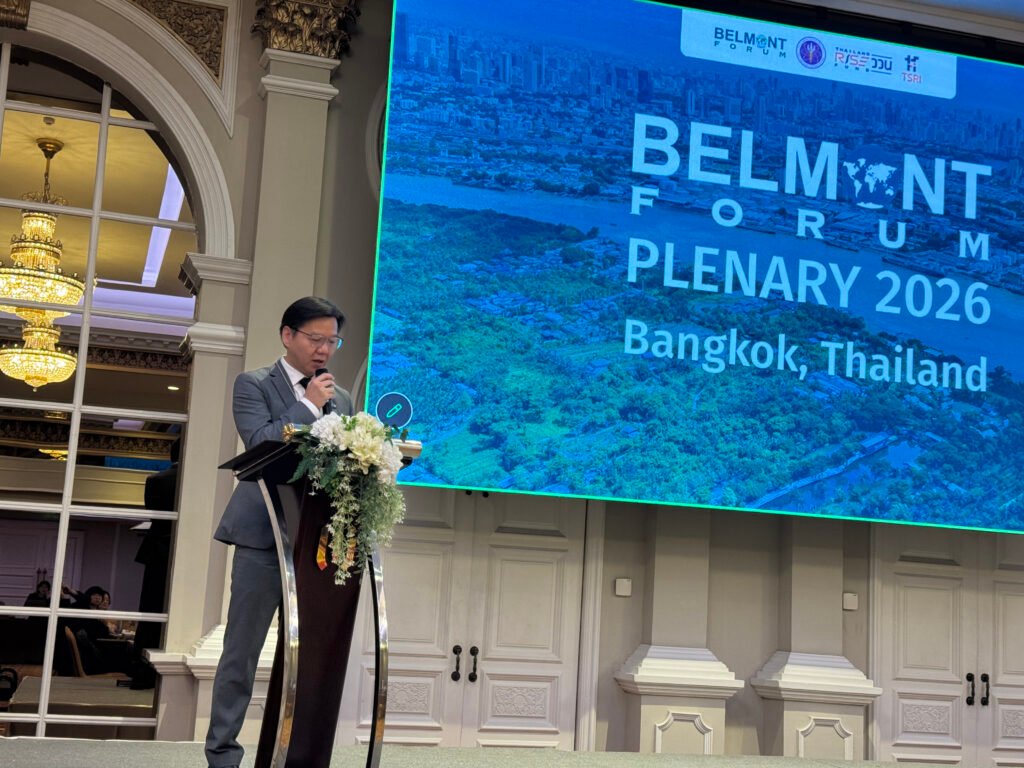
In 2026, the Belmont Forum plenary was in Bangkok, hosted by Thailand Science Research and Innovation (TSRI). Our guests spanned a distinguished group of leaders from research funding organizations, international institutions, and the scientific community.
Over the past years, the Belmont Forum has become one of the most important platforms for international research collaboration addressing global environmental change. Whether we are addressing biodiversity loss, sustainable consumption and production, ocean sustainability, or the responsible and reasonable use of emerging technologies, our success depends on cooperation across borders, sectors, and disciplines.
Key Themes and Strategic Direction
Our plenary emphasized that in an era of increasing uncertainty and interconnected risk, no single country, institution, or discipline can solve global challenges alone. Reflecting on the value of the Forum’s membership, Asst. Prof. Poolsak Koseeyaporn, Ph.D., Vice President of TSRI, noted: “For Thailand, participation in the Belmont Forum has been highly valuable. It has enabled Thai researchers to engage with international networks, contribute to collaborative research initiatives, and bring international perspectives into our national research and innovation ecosystem.”
Participants highlighted that scientific advancement, supported by new technologies and a growing recognition of diverse perspectives – including Indigenous knowledge and societal partner engagement – is essential for producing actionable, meaningful research.
Welcoming New Associates
Following the successful votes by BF members, we welcomed three new associates during the 2026 plenary: GCSE, WAITRO, and FASRC. This showcases the Belmont Forum’s expanding global network.
GCSE (Global Council for Science and the Environment): Based in Washington, D.C., GCSE focuses on bridging the gap between evidence-based science and decision-making. Their ecosystem includes youth leadership programs, an Applied Solutions Network, and innovation labs focused on planetary health. The association would help the Belmont Forum research community connect with decision-makers in different areas around the world.
WAITRO (World Association of Industrial and Technological Research Organizations): An independent association founded under UNIDO, WAITRO connects researchers and organizations worldwide to foster innovation and technology transfer. They aim to complement the Forum by helping build partnerships and strengthening research capacity.
FASRC (Federation of Arab Scientific Research Councils): FASRC works to rebuild scientific capacity across the Arab region. By connecting the Arab research councils and institutions with global opportunities, they aim to bring regional expertise in climate adaptation, food security, and renewable energy into the broader international research landscape. As a Belmont Forum associate, FASRC envisions serving as a regional bridge between the Forum and Arab research systems, also contributing through expert mobilization and capacity building.
Belmont Forum Foundation and FAST Forum
FAST Forum: This cross-sector community continues to advance new co-funding models and increase visibility for coordination in sustainability innovations. A key recent achievement includes the AXA Research Fund joining the Climate Resilience Collaborative Research Action (CRA) to support societal actors.
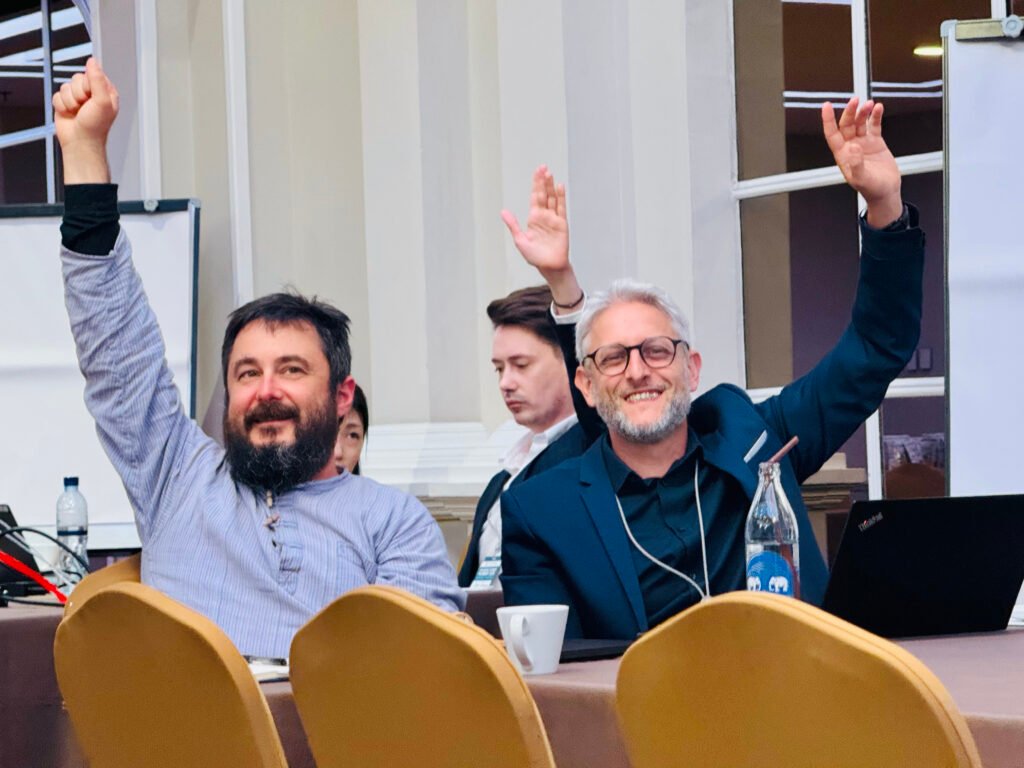
Belmont Forum Foundation: As the non-profit arm of the BF, the Belmont Forum Foundation is working to diversify funding streams. Recent milestones include the launch of a redesigned website, the establishment of a U.S. bank account, the securing of a kickoff funding partner (Avina Foundation), and active fundraising campaigns centered on four pillars: Indigenous communities, the Advancing Leadership Program (ALP), Low- and Middle-Income Countries (LMICs), and support for U.S. researchers affected by federal funding cuts.
Indigenous Knowledge Systems and Science: Strengthening Equitable Partnerships and Funding Pathways in Transdisciplinary Research
Alongside the Bangkok plenary, the Belmont Forum, with the support of the Avina Foundation and co-hosted by Chulalongkorn University’s Institute of Asian Studies, convened a specialized workshop. This session united a global delegation of Indigenous leaders from the Amazon, Panama, Indonesia, Thailand, the Russian Arctic, and Mauritius. These representatives came from a diverse coalition of regional and international bodies, including the Local Communities and Indigenous Peoples Platform (LCIPP), the International Indigenous Forum on Biodiversity (IIFB), and the Global Alliance of Territorial Communities (GATC), alongside regional groups like COICA, AMAN, IPAC/IAI, GIYSCC, PICLAs, and the Council of Indigenous Peoples in Thailand (CIPT).
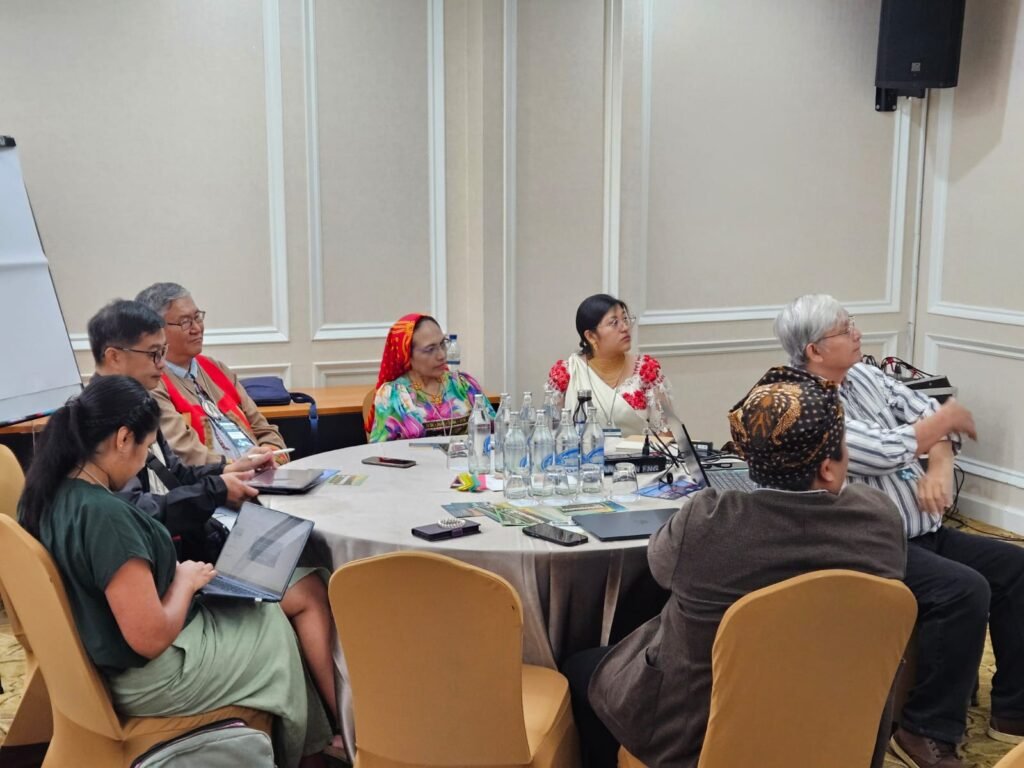
The primary objective of this workshop was to pinpoint the systemic and structural barriers that prevent Indigenous scholars and communities from accessing vital research resources. By exploring new pathways for collaboration, the session aimed to foster more respectful and equitable scientific partnerships within the Forum’s upcoming Collaborative Research Actions (CRAs). These efforts are designed to ensure that Indigenous Peoples and Local Communities (IPLCs) can lead and participate meaningfully in sustainability science, aligning with broader multilateral goals for global climate and biodiversity action.
As the Forum moves forward, the commitment to fostering trust, strengthening international partnerships, and advancing science for the benefit of society and the planet remains the central mission.