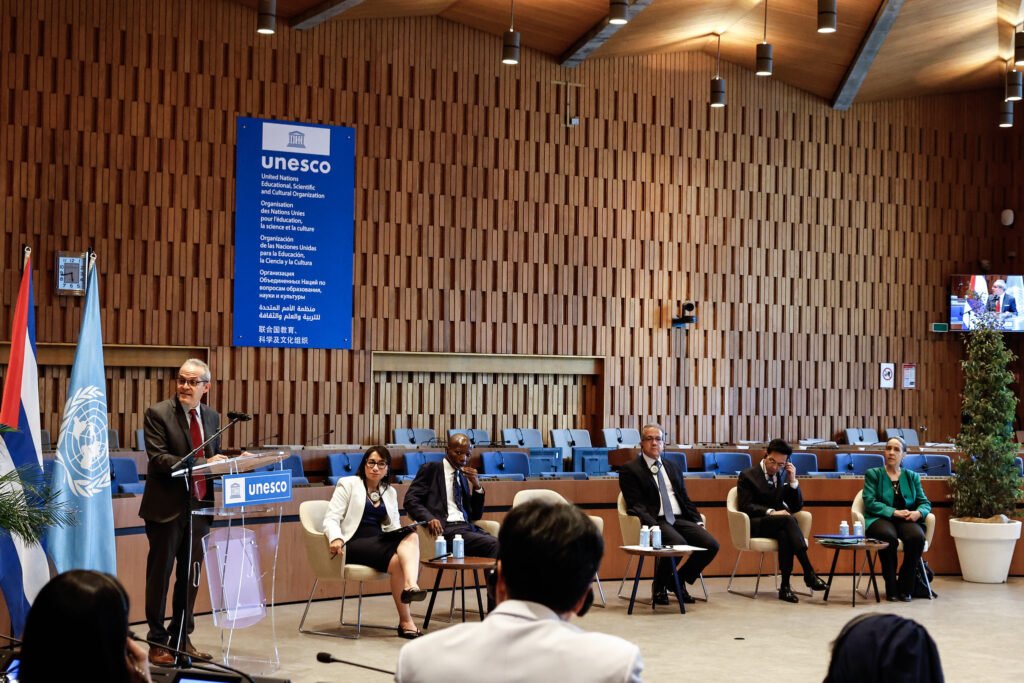
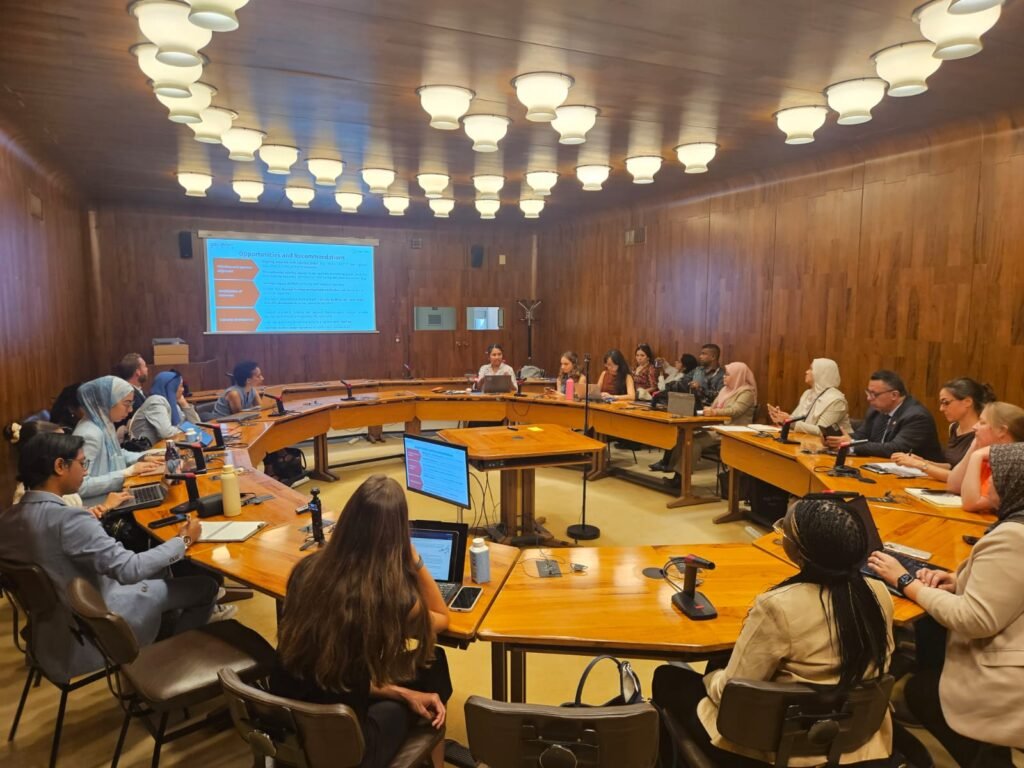
From 15–17 July 2026, the Belmont Forum actively contributed to the UNESCO Global Conference of the International Decade of Sciences for Sustainable Development (IDSSD), held at UNESCO Headquarters in Paris, France. Under the theme “Science in Action: Charting a Sustainable and Equitable Future for All,” the conference convened governments, funding organizations, researchers, civil society, industry, and international organizations to strengthen the role of science in advancing sustainable development.
Across four strategic sessions, the Belmont Forum contributed its expertise in fostering transdisciplinary research, strengthening equitable international partnerships, promoting Indigenous Knowledge, and advancing collaborative funding approaches.
Co-designing future research on Biodiversity and Arctic Change
The Belmont Forum hosted an interactive scoping workshop focused on the co-development of two future Collaborative Research Actions (CRAs): Biodiversity 3 and Arctic 3. The session identified priority research themes, knowledge gaps, and opportunities for international collaboration to help shape future multilateral funding calls and strengthen the science–policy–society interface.
Strengthening equitable partnerships with Indigenous Peoples and Local Communities
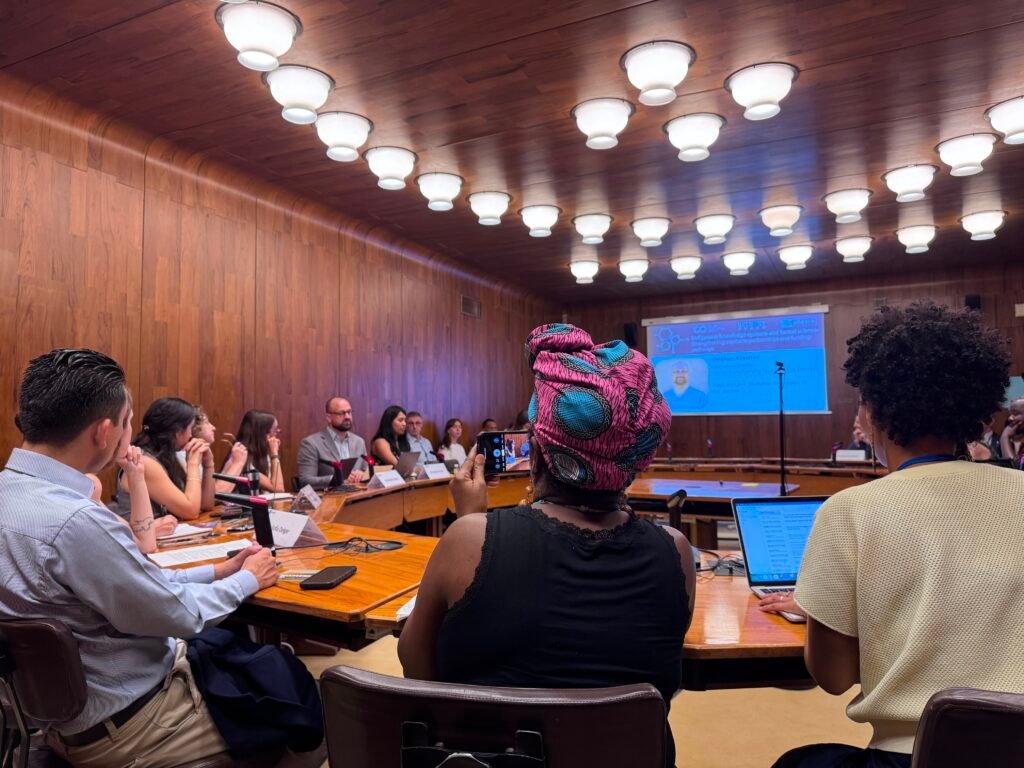
The Belmont Forum also contributed to the thematic event “Indigenous Knowledge Systems and Formal Science: Strengthening Equitable Partnerships and Funding Pathways,” which examined how research systems can move beyond consultation towards genuine co-production of knowledge.
Participants identified several persistent barriers limiting Indigenous Peoples’ access to research funding, including insufficient recognition of diverse knowledge systems, consent processes that often remain procedural rather than participatory, reliance on academic credentials that overlook traditional knowledge holders, and funding cycles that do not align with Indigenous knowledge production and governance processes.
The dialogue also highlighted practical mechanisms that could strengthen Indigenous participation in international research, including:
- establishing Indigenous Funds and advisory committees within research networks such as the Belmont Forum;
- allocating research funding directly to Indigenous Peoples’ and Local Communities’ territories;
- embedding Indigenous participation in the design of research calls and proposal review processes;
- adopting governance models that combine the leadership of Indigenous Elders with youth representation; and
- drawing on successful funding mechanisms such as Podáali (Brazil), the Shandia Mechanism, the FSC Indigenous Peoples’ Body, and the BES Solution Fund.
The session also showcased experiences from National Ecosystem Assessments developed through BES-Net and UNESCO-LINKS, and concluded with the launch of the Belmont Forum Foundation’s focus area which supports the equitable participation of Indigenous Peoples and Local Communities in research.
Learn more about the Indigenous Communities Focus Area here
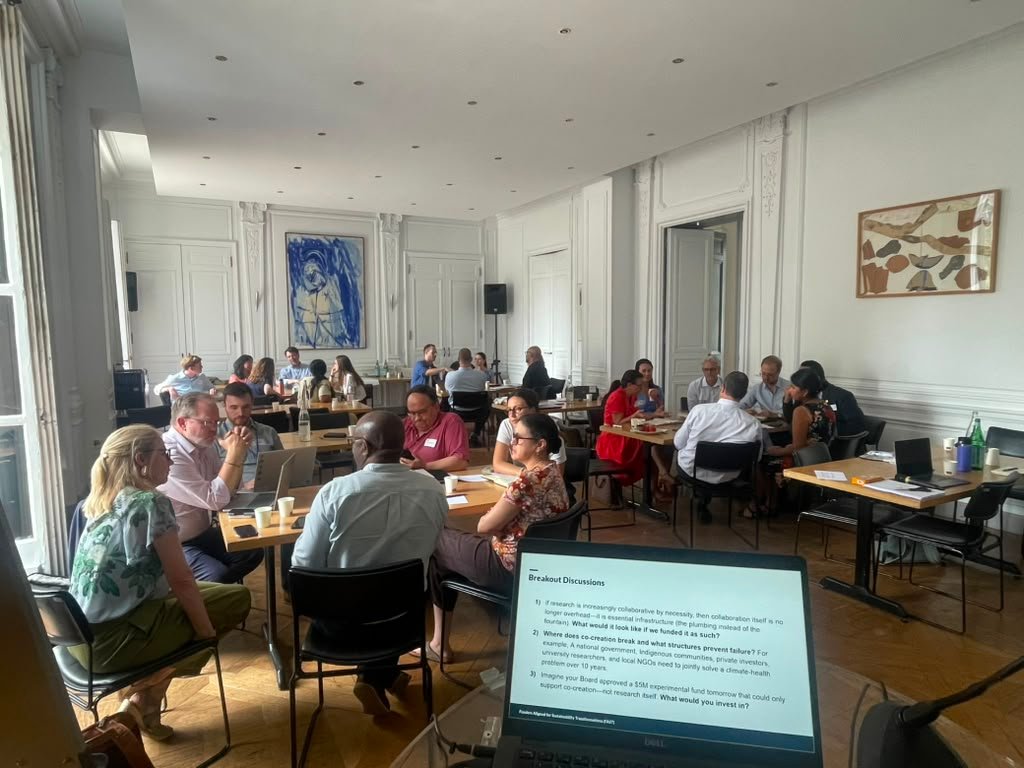
Advancing collaboration through the FAST Forum
The Belmont Forum participated in the Funders Aligned for Sustainability Transformations (FAST) Forum, a high-level dialogue bringing together public funders, philanthropic organizations, industry, and investors to explore how funding ecosystems can better support sustainability transformations. Discussions focused on strengthening collaboration across funding sectors, identifying gaps that slow the translation of research into real-world impact, and developing more coordinated approaches to financing sustainability innovation.
The Belmont Forum contributed its experience in international collaborative funding, demonstrating how coordinated, multilateral research investments can foster stronger partnerships between academia, governments, communities, and other societal actors while supporting long-term, systems-level transformation.
Advancing South–South scientific collaboration
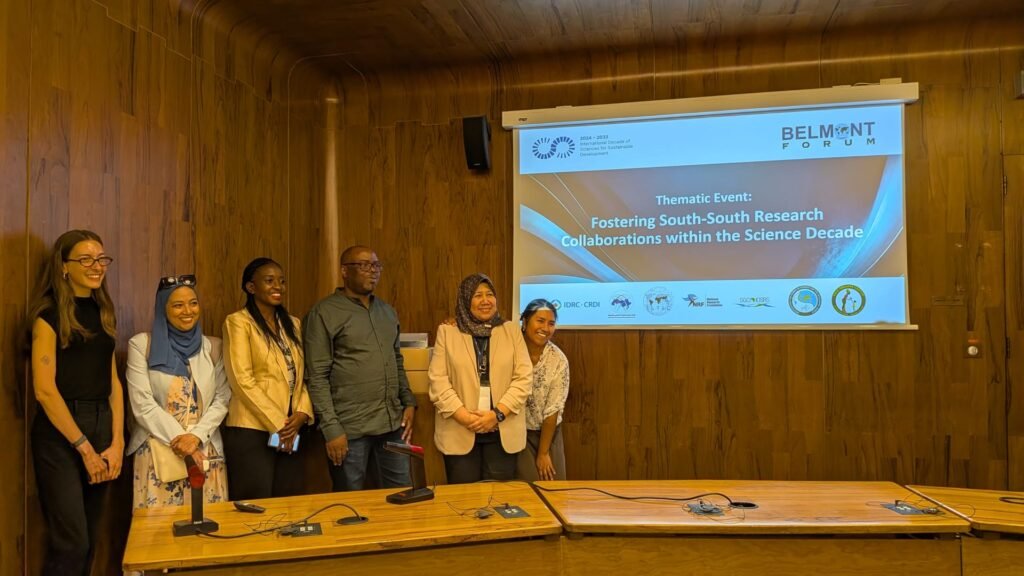
The Belmont Forum also contributed to the thematic event “Fostering South–South Scientific Collaborations within the Science Decade,” which explored how international research partnerships can better enable leadership from the Global South in shaping the global research agenda.
The discussion highlighted that South–South collaboration is not simply about expanding participation—it is about strengthening equitable partnerships that empower countries and institutions to co-lead agenda-setting, knowledge co-production, and funding strategies. Participants emphasized the importance of moving beyond short-term project funding towards sustained research networks, recognising the diversity of the Global South, and ensuring the meaningful participation of women, Indigenous Peoples, local communities, and youth.
The session also produced a series of recommendations for the International Decade of Sciences for Sustainable Development and the post-2030 agenda, including:
- placing Global South perspectives at the centre of international scientific discussions;
- proactively addressing power imbalances in partnerships between the Global North, the Global South, and societal actors;
- enabling genuine co-creation by involving societal actors as research partners rather than research subjects;
- shifting investment from individual projects to long-term collaborative networks; and
- improving the transparency and accessibility of funding flows to better monitor impact and support equitable research partnerships.
Throughout the three-day conference, these discussions demonstrated how the Forum’s collaborative funding model supports the objectives of the International Decade of Sciences for Sustainable Development by strengthening science-policy-society interfaces and promoting more equitable international research partnerships.