
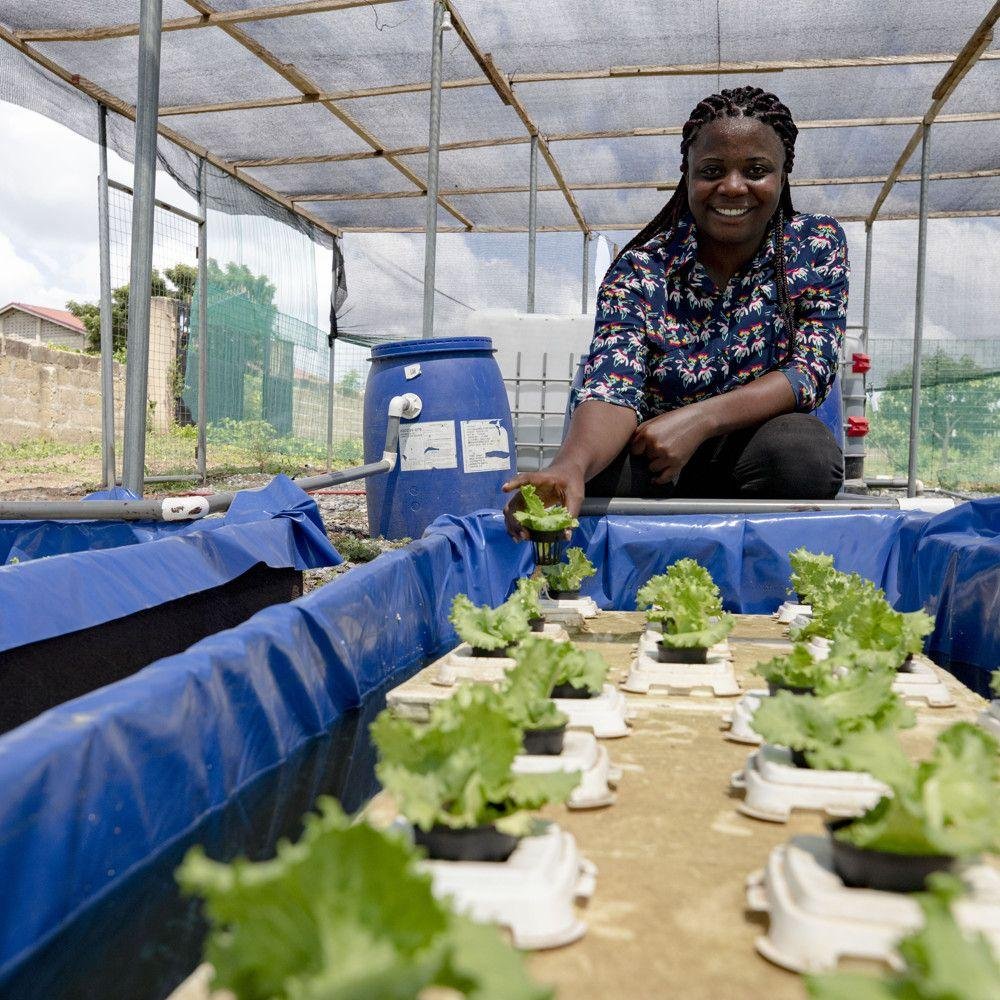
An awarded project under the Belmont Forum’s Africa Regional Call, FEAT4AFRICA brings together innovative agricultural technologies and community-driven approaches to strengthen food and nutrition security in African urban areas.
How can innovation at the intersection of food, water, energy and health contribute to more sustainable food systems in Africa?
The FEAT4AFRICA – Food-Energy-wAter-healTh innovations for sustainable development in AFRICA project addresses this question by promoting innovative, accessible and sustainable food production systems in urban areas.
Awarded under the Belmont Forum’s Africa Regional Call, the project aims to strengthen food and nutrition security (FNS) through the integration of innovative agri-food technologies within a network of Living Labs.
Connecting food, water, energy and health
FEAT4AFRICA introduces low-cost, soilless and solar-powered food production technologies, including hydroponics, bioponics, aquaponics and recirculating aquaculture systems (RAS).
By integrating these approaches, the project seeks to strengthen the Food-Water-Energy-Health Nexus while promoting more resource-efficient and sustainable food production practices.
The Living Lab network provides a collaborative environment for co-creating solutions, bringing together communities and other stakeholders to develop circular agri-food practices and innovative business models adapted to local contexts.
Empowering communities through innovation
Beyond technological innovation, FEAT4AFRICA places particular emphasis on the participation of vulnerable groups, especially women and young people.
By supporting their integration into urban food value chains, the project aims to expand opportunities for local engagement, knowledge exchange and entrepreneurship while contributing to the transformation of agri-food systems.
From innovation to societal impact
FEAT4AFRICA aims to produce significant quantities of micronutrient-rich vegetables and fish, with the ambition of meeting the consumption needs of more than 2,400 people.
Through its integrated approach, the project seeks to demonstrate how innovative agricultural technologies, community participation and circular practices can contribute to more sustainable urban food systems, involving the community of Nigeria.