
Location: Comoros – Mwali – Fomboni
Credit: Imame Toibibou
Initiative: BRIDGES Research Program – France 2030 (French government – France 2030)
Project: BRIDGES Research Program
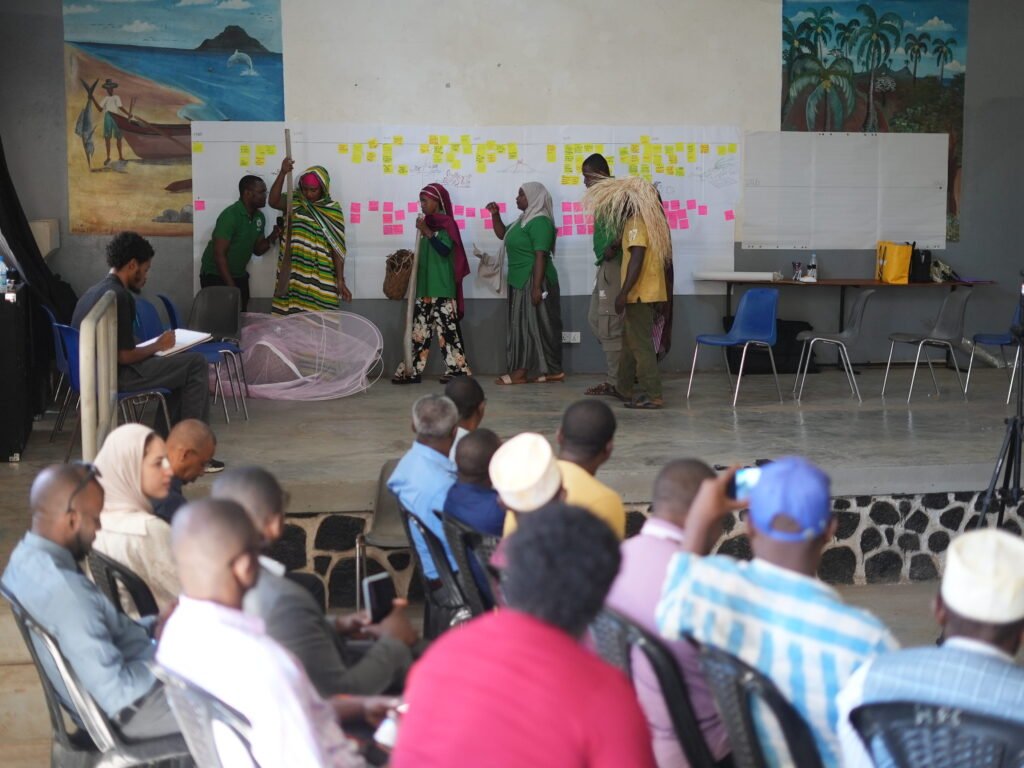
Story: This photo was taken in the Comoros during a BRIDGES co-construction workshop, part of a series of participatory workshops organized in 2026 across the programme’s study sites in the South-West Indian Ocean.
In the scene, actors perform a forum theatre play inspired by real-life tensions and cooperation challenges related to marine biodiversity conservation and fisheries management. Around them, participants from diverse backgrounds — fishers, decision-makers, managers, researchers, environmental organizations and other local stakeholders — watch attentively. But they are not passive spectators. In forum theatre, the audience is invited to step into the story, question the situation, propose alternatives and imagine how practices, relationships or decisions could change.
This moment illustrates the heart of BRIDGES’ transdisciplinary approach: creating a shared space where scientific knowledge, local experience, professional expertise and lived realities can meet. Rather than starting from predefined solutions, the workshop begins with the issues identified by the people who live, work and make decisions in the territory. Through dialogue, collective diagnosis and creative methods, participants explore the challenges of fisheries and marine conservation, as well as the possible pathways towards more just and sustainable futures.
The use of theatre makes visible what is often difficult to express in formal discussions: conflicts of use, power relations, misunderstandings, constraints, emotions and hopes. By transforming these tensions into a scene, the group can observe them from a new perspective and collectively test other ways of acting. The stage becomes a safe space to rehearse change before it happens in real life.
The societal impact of this work lies not only in the solutions that may emerge, but also in the process itself. By bringing together different actors and different ways of knowing, BRIDGES helps build trust, mutual understanding and research questions that are grounded in local priorities. The outcomes of these workshops will guide scientific and operational work over the coming years, ensuring that research responds to the needs, concerns and desired futures expressed by the territories themselves.
This image captures a simple but powerful idea: sustainable transformations are not written by one voice alone. They are co-created — through listening, imagination and collective action.