The Steering Committee (SC) is one of the Belmont Forum’s main governing bodies. The SC makes decisions about the direction of the Belmont Forum in intersessional periods and supports and advises on the delivery of decisions made at the biannual Plenary meetings. The Belmont Forum SC is populated by elected representatives of Belmont Forum Member organizations. It is led by Belmont Forum Co-chairs, who are elected by the membership for three-year terms. Since 2015, it has been mandatory for co-chairs to first serve on the Steering Committee before being eligible for the co-chair position.
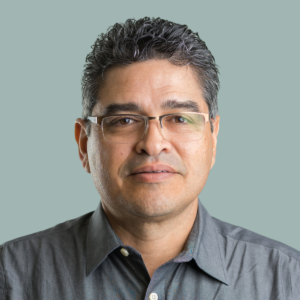
Omar López Alfano is the Intern Executive Director of the Inter-American Institute for Global Change Research (IAI), in charge of the IAI’s scientific programs and the development of initiatives, networks and partnerships for transdisciplinary research.
He brings over 25 years of experience in scientific research and capacity building in the Americas. He earned his Ph.D. in Biology from the University of Utah (USA) and completed his postdoctoral studies at the University of Wisconsin-Madison (USA) and the Center for Tropical Forest Science at the Smithsonian Tropical Research Institute (STRI).
He has been actively involved and played a leadership role at the science-government interface and has an extensive track record at the Institute. He served as Chair of the IAI’s Scientific Advisory Committee for three years and was Chair of the Transdisciplinary Committee of the Congress of Research and Innovation in Sustainability (SRI 2023) held in Panama in partnership with the IAI, the Belmont Forum, and Future Earth.
With nearly 40 publications in international journals that have been cited over 1,000 times, Dr. López Alfano is a prominent scientific figure. Before joining the IAI, he was the Technical Secretary of the National Research System (SNI) at the National Secretariat of Science, Technology, and Innovation (SENACYT) in Panama, where he played a key role in implementing public science policies, disseminating knowledge, and recognizing scientific productivity to consolidate a critical mass of researchers in the country.