
Strengthening Indigenous community resilience through knowledge co-generation and community-led research
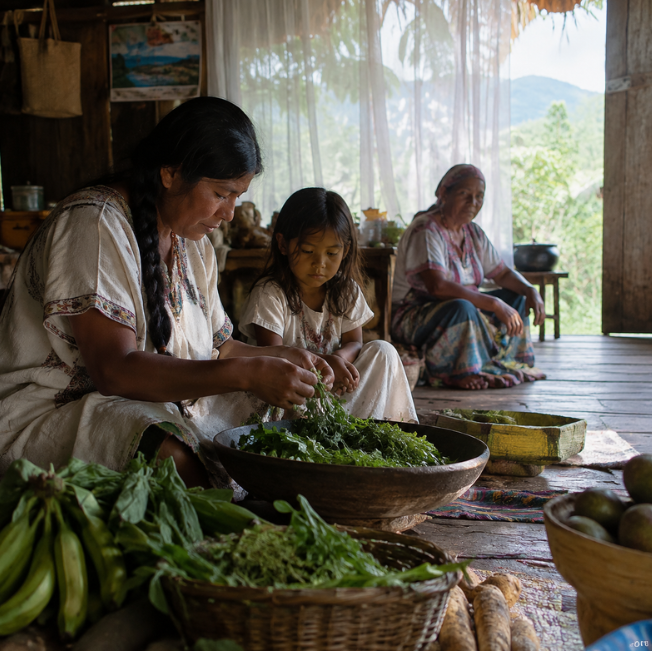
Indigenous communities across the Global South face interconnected climate and non-climate pressures that can affect their health, food systems, and livelihoods. The Indigenous Peoples Observatory Network (IPON) research programme addresses these challenges by documenting and examining Complex Climate-Health Emergencies (CCHEs) in Indigenous communities.
The project is one of the research initiatives funded under the Belmont Forum’s Climate, Environment, and Health Collaborative Research Action (CRA).
Understanding Interconnected Climate and Health Risks
IPON-CCHEs explores how climate-related and other stressors interact to shape health risks, vulnerabilities, and resilience in Indigenous communities. The research spans Uganda, Sri Lanka, India, Peru, Bolivia, and Argentina, examining the connections between environmental health, Indigenous health, and food systems.
Indigenous Knowledge at the Centre of Research
The programme is operationalized through Indigenous Peoples Observatories, bringing together a transdisciplinary team of scientists and Indigenous knowledge holders. By combining scientific approaches with Indigenous knowledge systems, the project supports participatory monitoring, knowledge co-generation, and local capacity-building.
IPON-CCHEs also engages Indigenous partners, university collaborators, and global organizations, including the Pan American Health Organization (PAHO/WHO), the Alliance for Health Policy and Systems Research, and the Global Hub on Indigenous Peoples’ Food Systems, hosted by the Food and Agriculture Organization of the United Nations (FAO).
Supporting Community-Led Solutions
Through pilot interventions and participatory approaches, IPON-CCHEs works to strengthen resilience in Indigenous health and food systems. By recognizing Indigenous knowledge and community priorities, the programme supports locally grounded responses to complex climate-health emergencies and reinforces the role of Indigenous communities in shaping solutions.
The project also involves 16 countries: Peru, Uganda, UK, USA, India, Italy, Canada, Switzerland, Australia, Argentina, Sri Lanka, Bolivia, Namibia, Ghana, South Africa and Germany.